

Channels: Building Your Playing Field
Trading Channels
Now that we know how to draw a trend line, let’s take the next step and build something more powerful: a proper playing field.
Trading Channels
What Is a Channel?
A channel is simply two parallel lines drawn around price action — your original trend line, and a second line running perfectly parallel to it on the opposite side of the market. Together they box the market into a defined space, a “playing field” where price tends to move, bounce, and breathe.
The key word here is parallel. The angle of your channel isn’t something you guess or eyeball — it’s inherited directly from your original trend line, the one you already proved out against past price action. If that trend line respects the market’s true rhythm, then a parallel copy of it will too.
How to Build One
- Start with your trend line. This should already be validated — a line that price has respected multiple times in the past, not just a line that looks nice.
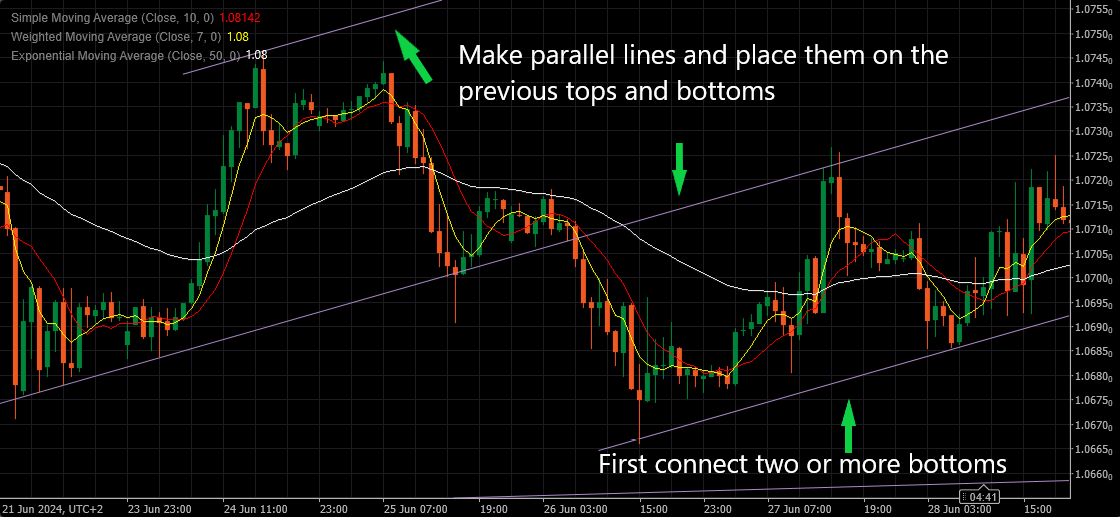
- Draw a parallel line on the other side of the price action, touching the highs (or lows) that mirror your trend line’s touches. Take your time here — the goal is to find the best placement, the one that captures the most touches and respects the most turning points. As shown in the first picture, there’s often more than one reasonable spot to place that parallel line — test a few, and use the one the market confirms most often. More validated touches, better channel.
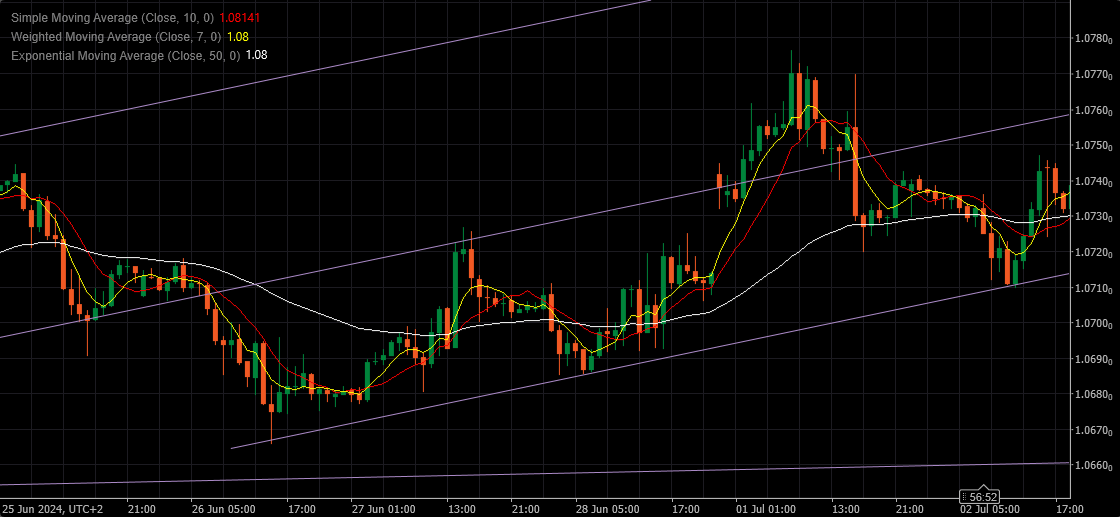
- Extend both lines into the future. This is where the real value shows up (see picture two). A channel isn’t just a description of where price has been — it’s a projection of where price is likely to go, and where the edges of that projection sit.
Why This Matters
Once your channel is drawn and extended, you’ve built yourself a genuine playing field. It tells you:
- Where to enter
- typically near one edge of the channel, in the direction the channel is sloping
- Where to place your stop
- just outside the channel boundary, where you’d be proven wrong
- Where the market is really moving
- the slope and width of the channel show you the underlying trend, stripped of the noise
- What to expect next
- as price approaches the opposite edge, you have a reasonable target and a warning that momentum may shift
Proof in the Charts
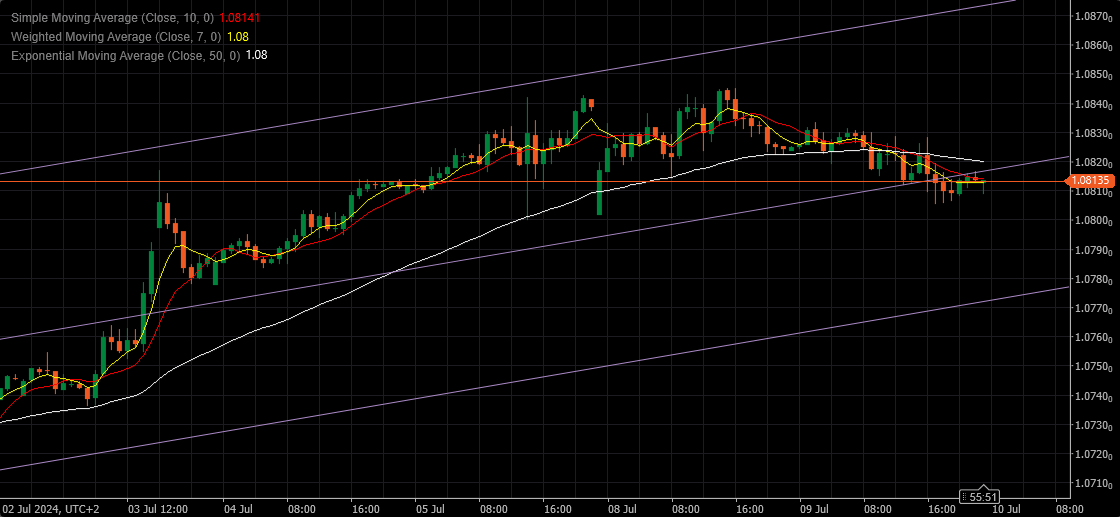
Look at pictures one through three. If you had drawn this channel using the approach above back on June 26th, you would have had a clear, structured way to follow the market and profit from it all the way to today. And on the trades where you got it wrong — because you will get some wrong — a properly placed stop loss, sitting just outside the channel, would have kept your account intact instead of wiping it out.
That’s the real power of this method. It’s not about being right every time. It’s about having a framework that keeps you in the game long enough for your edge to play out.
Channels Are Always There
This is the part most traders miss: channels aren’t something you invent. Those channels already exist in the market, sitting quietly in the price action, waiting to be found. Your job isn’t to force a channel onto a chart. It’s to find the one the market has already drawn for you and simply trace it.
In a future post, I’ll show you some prime examples of channels that were established roughly 35 years ago. And they are still working perfectly today. Some of my trend lines are older than most of the people reading this.
We didn’t build these roads. We’re just maintaining them.
Add comment